

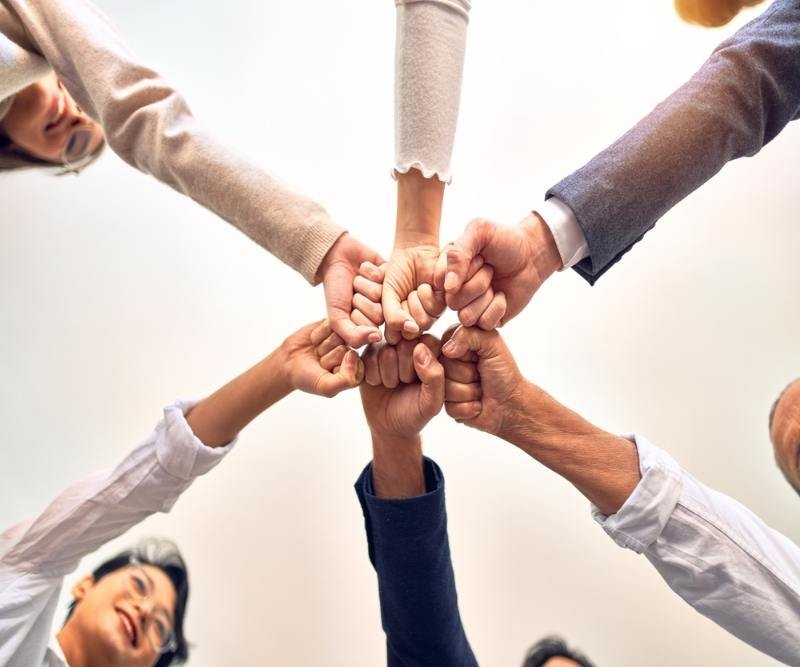
The basics of good teamwork make difficult stages in any daunting project more straightforward and help clear the communication channels. Team members in a team, regardless of whether they are together or distributed within departments, are kept on track. Good teamwork skills also contribute toward workplace camaraderie. Teamwork ability can improve work relations.
Teamwork ability represents the skills that an individual needs in an organization to be able to work with teammates closely towards a mutual intent; among them are effective communication skills, effective listening ability, and responsibility, as well as team awareness (Indeed).
An ideal team player shares information rapidly and appropriately, understands and tolerates diverse work styles as well as perspectives, and adheres to the job responsibly, asking for help readily. Possessing good skills for teamwork can also help cultivate confidence among people in sharing issues before they have to grow into problems.
Explore This Topic: Public Speaking Tips for Clear, Confident Talks That Win
Teamwork skills at work often impact how productively a team manages to complete assignments. Employees can understand tasks clearly, and their responsibilities are determined to minimize ambiguity about due dates, objectives, and desired outputs. Teamwork skills in the workplace can thus prevent doubled efforts and extraneous delays, thereby enhancing how efficiently team members contribute.
Stronger workplace relationships represent another facet. Since team members can listen to each other, demonstrate empathy toward colleagues, and hold open discussions, the probability that workers build an element of faith in one another tends to rise, creating more effective communication and contributing to both increased productivity and work setting improvement.

Knowing examples of team skills makes such aptitudes easier to comprehend and use effectively. It's necessary to recognize teamwork as an array of abilities that assist a team and its members to function at their best, rather than viewing them as one general capability. Some examples are:
These teamwork skills examples serve the purpose of transforming somewhat abstract attributes into concrete behaviors one can practice—for instance, instead of aiming to simply become a ‘team player,' it could involve a conscious effort to ask relevant follow-up questions at meetings.
Improving team-related skills takes into consideration how others respond to your messages and actions. Seek input from your manager, coworkers whom you trust, or colleagues. Ask questions such as 'Do other people believe I'm a good listener?' rather than just asking them, 'Am I a good team player?'. You may thus have a clear idea of where you can try to refine your teamwork abilities at work.
You can choose one skill to enhance consistently. In instances where your strength lies in something other than communication (for example), you might like to focus on communicating concisely and clearly in meetings. Since it's important to enhance how you interact with others, if difficult communication challenges you in the workplace, focus on being a better listener when another team member expresses an issue and on coming up with concrete and sensible problem-solving instead of seeing problems with their proposals or ideas.
Teamwork skills examples can also prove to be very beneficial when drafting a resume and also when answering interview questions. Rather than presenting yourself as a “team player,” highlight what specifically happened and how your teamwork had an influence on others to change the course of events at work:
For example, you may want to refer to your ability to delegate work between multiple people or sections or to help workers at the workplace collaborate and find the ideal solution for an existing dispute. Providing concrete situations of your collaboration and achievements helps make the employer visualize your experience clearly and effectively.
A frequent lapse is believing that teamwork requires always getting involved with your coworkers; although collaboration is important to many teamwork skill sets in the work environment, you cannot always participate. It's often essential to delegate tasks to people according to their skills, as well as ensure everyone still stays focused on the intended destination and ultimate objectives of the task. Overstepping your duties without proper communication could often result in much disorder as well as the risk of conflict.
Secondly, often workers will avoid discussing hard subjects and issues. The ability to articulate and express feelings is a crucial part of teamwork, as any concerns can develop into greater issues when held in the shadows of unexpressed or unsolved worries. Having solid teamwork expertise includes the skill of raising relevant concerns at meetings while maintaining a goal of finding practical responses.
Teamwork skills aren't mastered instantly but by working effectively at it every day. Communication, attentive listening, taking on accountability, empathy, and a firm commitment to your group's collective endeavors result in effective cooperation in the workplace.
Knowing "What are teamwork skills?' and improving those skills on a consistent basis leads to skills for teamwork at work, stronger work associations, and stronger professional bonds.
Yes, teamwork skills are a competency that can be achieved through consistent training and practice. Through your conscious efforts to control your communication, seek feedback, study skilled co-workers, or set small tasks that enable improvement, teamwork may then be smoother.
In the context of remote workers, good skills for teamwork appear to be much more critical as they communicate among colleagues in forms of typed messages, video calls, shared documents, and team management platforms. Clear update delivery, follow-through on responsibilities, and willingness to listen become much more relevant to the relationship between colleagues separated by distance.
Students can build their skills through activities such as group projects, associations, sports, volunteering work, and class discussions. Each assigned duty will need to be accomplished; attention needs to be given to team members; conflict needs to be overcome; success needs to be achieved, and these will provide chances for practice.
Different teams may require unique skills from their members under various circumstances. Nonetheless, communication and effective listening stand out due to their significance in informing understanding of common requirements, exchanging opinions, identifying problem issues, and reacting accordingly, thereby reflecting individual responses to collective tasks from others.
These skills do not simply represent a particular strength but could also link to some actual achievements. Try to describe how you collaborate, coordinate with other people, help solve problems, support your team in working toward certain objectives, or bring significant benefits like improved communication or meeting a crucial deadline. Such outcomes are capable of creating substantial confidence in the value of that skill.
This content was created by AI