

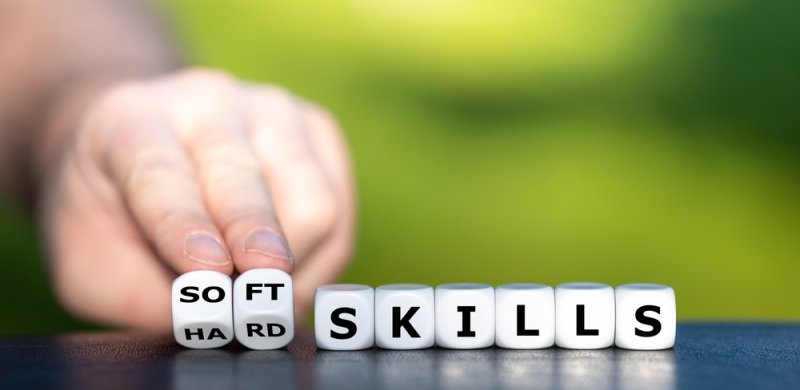
There's no technical pitch or personality pitch between hard skills and soft skills. They resolve various work issues. Hard skills demonstrate how to do a certain job, and soft skills impact communication, teamwork, judgment, and reliability. A developer could be experienced in a number of programming languages but unclear about technical problems. A salesperson may be a good communicator but not familiar with the product. Filling those two gaps can often lead to career growth.
Balanced by role and experience. Common look-for-positions skills are technical fundamentals that often have to be mastered before progressing on to more highly skilled roles; communication and decision-making skills are usually required by more senior roles. In this blog, hard skills vs. soft skills are explained using differences, examples, usage in the workplace, and practical career development.
Growth for a career does not just depend on technical skills or capabilities. Hard skills assist employees in completing certain tasks efficiently and precisely.
These soft skills show up everywhere in the workplace. They shape the way folks communicate, adapt when things shift, and pull together to get things done. These abilities matter at every stage of your career, and honestly, you almost always use them alongside your technical skills.
Being sure of where skills fit will also make job applications and job development more targeted.
Don't Miss: Why Conflict Resolution Skills Matter For Stronger Teams
Hard skills are measurable abilities usually gained through education, training, practice, or direct work experience. They are often easier to test because a task can be completed, demonstrated, or assessed.
Common hard skills examples vary heavily by profession. A lawyer, accountant, designer, and software engineer will not need the same technical abilities.
Examples include:
Certificates can support hard skills, but actual application matters more. Someone who lists Excel on a resume but cannot build a useful worksheet has a weak claim.
Hard skills vs. soft skills on resume sections should be handled differently. Technical abilities can usually be listed with specific tools, qualifications, or proficiency levels. Soft skills need evidence; otherwise they become generic claims.
Instead of writing “good communication,” describe what happened: “Presented weekly project updates to a cross-functional team.” The second statement gives employers something concrete to assess.
Suggested Reading: Decision-Making Skills: How to Make Smarter Choices
Soft skills involve behaviors that affect communication, cooperation, adaptability, problem-solving, and professional relationships. They are less straightforward to measure, yet their effect becomes visible in daily work.
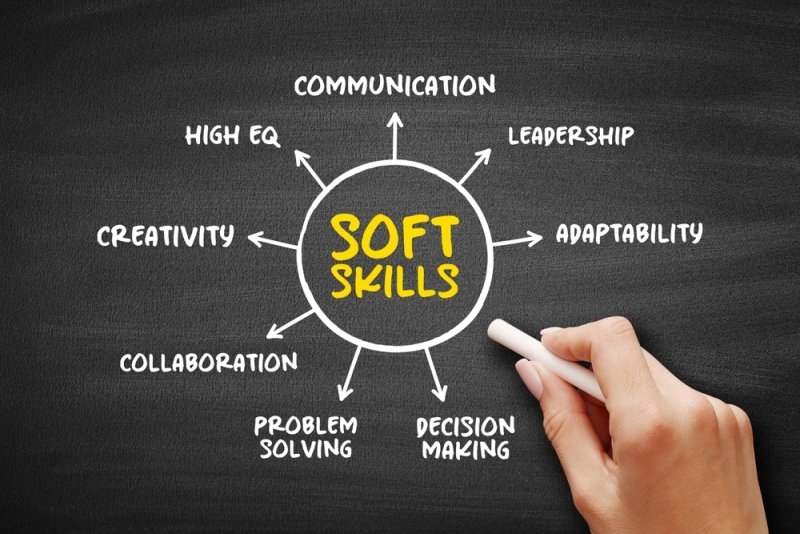
Soft skills examples include active listening, conflict management, adaptability, teamwork, time management, negotiation, and clear communication. These abilities are useful across industries because most jobs involve people, changing priorities, or shared responsibilities.
A strong employee may have excellent technical knowledge but still miss deadlines, react poorly to feedback, or create confusion in a team. Technical ability alone does not fix those problems.
The difference between hard skills and soft skills becomes clearer when both are placed beside each other.
| Area | Hard Skills | Soft Skills |
|---|---|---|
| Main focus | Technical performance | Behavior and interaction |
| Measurement | Tests, tasks, results | Observation, feedback, outcomes |
| Examples | Coding, accounting, SEO | Communication, teamwork, adaptability |
| How developed | Courses, practice, training | Experience, feedback, reflection |
| Job relevance | Role-specific | Useful across most roles |
The difference between hard skills and soft skills does not mean one category has greater value. A job may require advanced technical expertise but also depend on collaboration to produce results.
People sometimes think of hard skills and soft skills as separate, but they’re always teaming up on the job. Sure, you need technical know-how to get your main tasks done, but that’s just one part of the equation. Explaining your choices, solving problems, and getting people on board are just as important—they’re often what make the work actually succeed.
Take a digital marketing executive, for example. Their hard skills are things like SEO, analytics, keyword research, and pulling together campaign reports. But that’s not the whole story. Presenting results to a client, responding to criticism, and coordinating with designers involve soft skills.
The same pattern appears in other jobs. A nurse needs clinical knowledge plus communication. A manager needs operational knowledge plus delegation. A lawyer needs legal research ability plus negotiation and client communication.
Why are hard skills and soft skills important? Because workplaces rarely reward isolated ability for long. Technical competence helps a person enter and perform in a role; communication, adaptability, and cooperation can affect how effectively that competence is used.
Career growth also changes the mix. Someone starting as a specialist may spend most of the day applying technical skills. After promotion, they may spend more time explaining work, mentoring colleagues, and making decisions.
Which matters more—hard skills or soft skills? It depends on the job, the industry, and how much responsibility you have. You usually see what’s expected by reading job descriptions. They list not just qualifications and tools but also the behaviors people want to see.
The difference between hard skills and soft skills isn’t complicated. Hard skills are hands-on, technical abilities you can learn through training and practice. Soft skills are behavioral abilities that influence how a person communicates, adapts, collaborates, and handles workplace situations.
For job seekers, the useful approach is not to collect random skills. Match skills to the work you want to perform.
How to develop hard skills and soft skills requires different methods. You get better at hard skills by taking classes, tackling new projects, or just repeating the process until it feels natural. But soft skills? They come from real-life experiences—talking with people, listening to feedback, getting through rough conversations, and figuring out what clicks and what falls flat.
If you want something practical:
Hard skills vs. soft skills becomes most useful when viewed across career progression. Technical expertise can establish credibility; soft skills can help that expertise travel through teams, clients, and leadership responsibilities.
An employee who can analyze data but cannot explain findings may struggle to influence decisions. One last thing—confidence in talking only gets you so far if you don’t know your stuff. People notice. Real career growth happens when you develop both your expertise and your people skills together. That’s what moves you forward.
Also Read: Presentation Skills Tips to Make Your Message Stick Clearly
Professional ability has two components: hard skills and soft skills. Hard skills give the technical support necessary to undertake a specific task; Soft skills impact the way that this task is communicated and managed and delivered to others. These are not to be seen as lifelong checklists. Needs evolve with new job roles, new technologies, and more responsibilities. When hiring or job seeking, focus on matching the skills to work and achievements rather than adding words to resumes that have no specific meaning.
Employees working in practice can find one technical gap and one behavioral gap and practice and give feedback to them at work. The basic point is to develop the useful skill, and along with that, the necessary people skills to make the skill effective.
Yes. Skills become outdated because technology, software, and practices in industry change with time. People keep their skills sharp by practicing regularly and picking up new ones along the way.
Not at all. It really depends on the job, the field, and your role in the organization. A technical expert needs a different mix of skills than someone managing clients.
Absolutely. Presentations, group projects, and volunteering—these all give students a chance to build those skills before they ever enter the workforce. Real-world practice helps them hit the ground running later on.
They can. Planning events, editing videos, running a community project, or setting up your own website could teach you relevant skills that can prove useful for the job.
An opportunity for managers to compare the requirements of jobs and the actual observed performance, project results, and feedback. Tackling specific gaps is easier than general statements like “needs improvement.”
This content was created by AI